

Farm, Ranch & specialty fencing
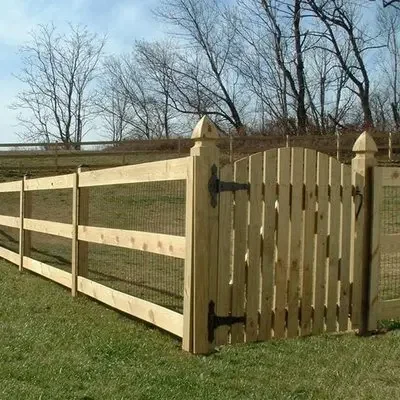
Farm fencing: Durable, cost-effective barriers designed to contain livestock, protect crops, and define property lines. Common materials include woven wire, welded wire, and field fence, chosen for animal type, terrain, and maintenance needs.
Ranch fencing: Heavy-duty systems built for larger herds and rougher terrain. Options include high-tensile wire, barbed wire, and post-and-rail, engineered for strength, long spans, and minimal upkeep while prioritizing animal safety and boundary security.
Specialty fencing: Custom solutions for specific needs—orchard and vineyard protection, wildlife exclusion, sports fields, equestrian arenas, and decorative or historic recreations. Materials and designs are selected for function, aesthetics, and regulatory or site-specific requirements.
Field fencing:
Field fencing is a sturdy, low-profile barrier used to contain livestock and mark property lines across pastures and rural land. Typically made from woven wire or high-tensile strands attached to wooden or metal posts, it balances durability with flexibility to withstand animal pressure and varied terrain. Properly installed field fencing provides reliable containment, minimizes maintenance, and protects pastureland from erosion and unwanted access.
Horse fencing:
options and their typical uses
Wood rail: Classic, sturdy, and highly visible — ideal for turnout and paddocks. Provides a natural look, strong physical barrier, and is gentle on horses when properly maintained. Requires periodic painting/staining and board/rail replacement.
Flex rail: Durable, low-profile synthetic rail that flexes on impact to reduce injury risk. Low maintenance, long-lasting, and attractive for arenas, pastures, and perimeter fencing. Works well with posts set at wider spacing.
No-climb wire: Tight, woven wire that prevents hooves from catching and keeps foals and small animals safe. Often used in combination with visible top rails (wood or flex) to increase visibility and reduce collision risk. Needs secure posts and proper tensioning.:
High-tensile wire:
High-tensile wire is a strong, low-stretch steel fencing wire designed to maintain tension over long spans. Typically made from high-carbon steel and often galvanized or coated for corrosion resistance, it resists sagging and reduces maintenance compared with mild steel. Commonly used for livestock, perimeter, and security fencing, high-tensile wire allows wider post spacing, fewer line posts, and delivers a firm, durable barrier that holds up under impact and environmental stress.
Split-rail fencing:
Split-rail fencing is a simple, rustic barrier made from horizontal rails fitted into posts, typically crafted from cedar, pine, or locust. It provides open visibility and a low-profile boundary ideal for marking property lines, enclosing livestock, or enhancing landscape aesthetics without blocking views. Durable, easy to install, and low-maintenance, split-rail fences age naturally and suit rural, farmhouse, and park settings.
Wildlife and dog-run fencing:
Durable, secure fencing designed to protect animals and property. Wildlife fencing keeps deer, coyotes, and other wildlife out of gardens and livestock areas with sturdy posts, tight mesh, and appropriate height. Dog-run fencing creates a safe, contained play area for dogs using strong materials, secure gates, and proper grounding to prevent digging and escape. Both types prioritize durability, visibility, and minimal maintenance for long-lasting protection.